


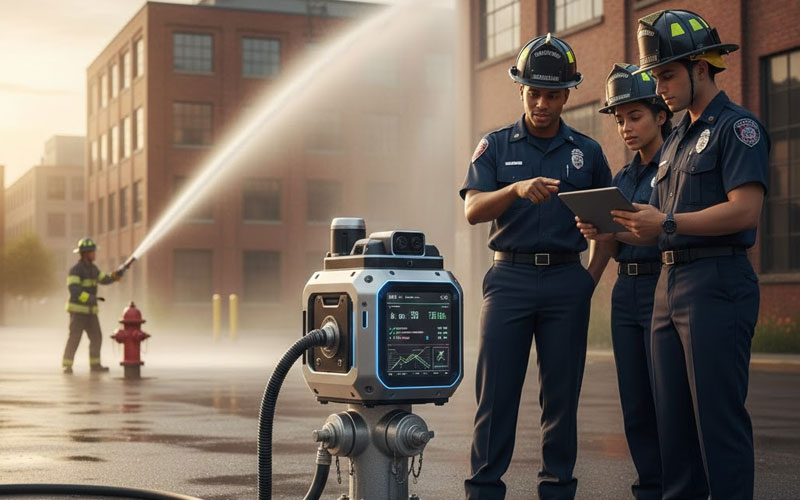
Fire flow testing is an essential practice for public safety, ensuring that water supply systems are ready to meet the demands of emergency fire suppression. Advances in automation technology are helping to reshape these tests, delivering improvements in speed and data quality while minimizing errors. For professionals and municipalities seeking reliable, streamlined fire flow testing, embracing automation is rapidly becoming a standard in the industry.
By integrating digital tools and next-generation sensors, modern automated systems can continuously measure water pressure, flow rates, and more, all with minimal disruption to the community. These benefits make it easier for those responsible for fire protection to uphold compliance and operational efficiency, while also enhancing the safety of workers and residents alike.
The Importance of Fire Flow Testing
Assessing a water utility’s capacity to combat fire is crucial to protecting property and lives. Fire flow tests ensure that local hydrants and water-delivery infrastructure can provide adequate pressure and flow during emergencies. The data obtained informs building codes, insurance rates, and community risk reduction tactics. When these measurements are inaccurate or go unperformed, firefighters may face significant challenges that further endanger the public and first responders.
Proper and routine fire flow testing also highlights maintenance needs and infrastructure deficiencies, allowing municipalities and building owners to plan upgrades or repairs proactively. Safe, up-to-date testing supports robust fire safety strategies and increases confidence among local stakeholders.
Beyond these benefits, automated fire flow testing processes can provide valuable data to broader municipal sustainability and water management systems. This can support initiatives to optimize water use and detect leaks or weaknesses across the network.
Traditional Methods and Their Limitations
Historically, fire flow testing depended largely on manual techniques using mechanical gauges. Technicians would often gather in teams to open hydrants, measure static and residual pressures, and compute flow rates using analog methods. This approach, while foundational, brings a range of challenges. Manual readings are highly susceptible to errors, including recording inconsistencies and transcription mistakes. Routine testing can disrupt water service, cause temporary discoloration, or strain limited personnel resources.
Another key limitation of traditional methods is the slow pace of data collection and reporting. It can take days or even weeks for results to reach stakeholders, delaying crucial infrastructure upgrades or fire safety planning. Manual tests also lack integration with modern digital reporting and analysis tools, leading to gaps in both compliance and operational intelligence.
Emergence of Automated Fire Flow Testing
To address inefficiencies in traditional processes, the field has shifted toward automated fire flow testing systems. These solutions employ electronic sensors, intelligent controllers, and data logging technologies that can be deployed directly on hydrants and water mains. Automation not only accelerates testing but also enables remote oversight and instant reporting. For example, companies like Honeywell have implemented advanced, self-testing fire system components that significantly reduce the need for manual labor, while raising the bar for accuracy and safety. Details about Honeywell’s digitalization of fire systems have been featured in recent news releases, illustrating the transformation underway.
Modern automated solutions can also feed data directly into fire protection management platforms. This connectivity enables organizations to maintain up-to-date compliance logs, visualize system performance, and quickly identify anomalies that could require maintenance or investigation.
Benefits of Automation in Fire Flow Testing
- Increased Accuracy: Digital sensors and automated processes remove much of the uncertainty associated with manual measurement, ensuring that flow rates, pressure readings, and event logs are reliable and standardized.
- Efficiency Gains: Automated fire flow tests can be executed in a fraction of the time required by traditional methods, freeing up technical staff for other mission-critical tasks and reducing service interruptions for customers.
- Heightened Safety: With less need for technicians to operate heavy hydrants or work on busy roadways, the risk of injury or exposure is diminished. Automation also supports safer site conditions for both testing personnel and the community.
- Advanced Data Integration: Automated systems often feature cloud-based data sharing and seamless integration with facility or utility management software. This real-time asset visibility informs better decision-making and structural planning.
Real-World Applications and Case Studies
Across North America and beyond, municipalities and industrial campuses are leveraging automated fire flow testing systems to meet regulatory demands and operational goals. Flowfinity, as highlighted in recent reports, has helped organizations modernize their testing workflows through automation. This shift has resulted in faster report turnaround, fewer errors, and improved overall fire safety readiness.
In addition, other cities and private entities are integrating automation into broader asset management and innovative infrastructure programs. These organizations consistently report higher testing reliability, more strategic capital planning, and reduced risks associated with manual fieldwork.
Future Trends in Fire Flow Testing Automation
Looking ahead, the next wave of fire flow testing automation will leverage tools such as Internet of Things (IoT) devices, artificial intelligence (AI), and machine learning. These advancements are poised to enable predictive analytics, remote system monitoring, and fully integrated emergency response workflows. For example, AI-driven data interpretation can help utilities shift from reactive repairs to proactive risk management, substantially reducing downtime and preserving the continuity of fire protection systems. IoT connectivity will ensure that data from every hydrant and pipeline is immediately available to decision-makers, strengthening community resilience across the board.
Conclusion
The automation of fire flow testing is already bringing about significant improvements in accuracy, efficiency, and safety. As more organizations embrace these innovative solutions, the quality and reliability of fire protection services will continue to rise. Automated fire flow testing stands as a model of how integrating technology into essential safety functions can help communities stay safer, smarter, and better prepared for emergencies.