


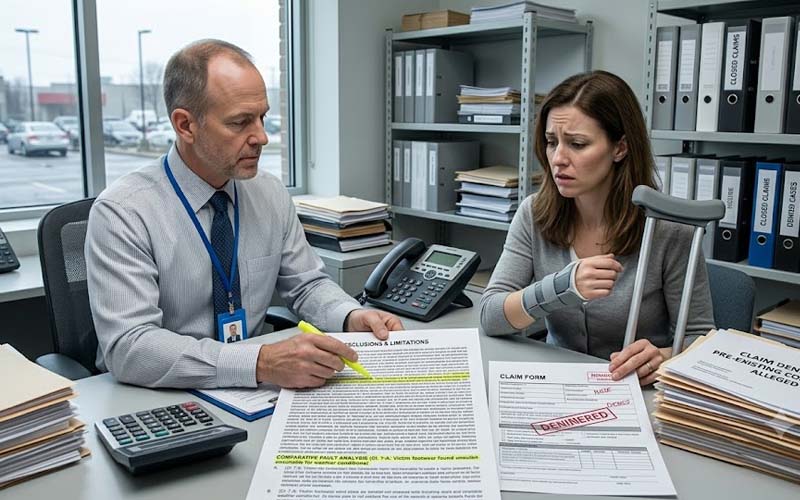
Claims adjusters often sound helpful after a hard fall, but their questions may be designed to reduce what the insurance company pays. Small details about shoes, timing, medical history, or a casual comment can become tools for shifting blame. A personal injury lawyer can review those arguments against the actual evidence instead of letting an insurer control the story.
Claiming Your Footwear Was Unsafe or Inappropriate for the Surface
Footwear is one of the first details an adjuster may study after a fall. They may suggest that sandals, heels, worn soles, work boots, or smooth-bottom shoes caused the accident instead of the unsafe floor, broken walkway, or poorly maintained stairs.
Shoe arguments can be misleading without context. A personal injury attorney may look at the surface condition, lighting, weather, slope, warning signs, and whether other people walked safely in the same footwear type before blaming the injured person’s shoes.
Arguing You Were Distracted by Your Phone or Not Looking Ahead
Phone use can become an easy target for insurance companies. An adjuster may claim the injured person was texting, checking directions, or looking away, even when the hazard itself was dangerous enough to cause a fall.
Distraction arguments do not erase a property owner’s safety duties. Someone searching for a personal injury lawyer near me may need help showing whether the walkway, spill, loose mat, pothole, or raised edge created a risk that should have been fixed or clearly marked.
Blaming a Pre-existing Medical Condition or Old Injury for the Fall
Past injuries often get used to muddy the claim. Adjusters may point to arthritis, back pain, knee trouble, balance issues, prior surgeries, or old sprains to suggest the fall happened because of the person’s health rather than the property hazard.
Medical history deserves careful review, not guesswork. A personal injury lawyer may compare older records with new imaging, updated diagnoses, treatment changes, and symptom patterns to show whether the fall caused a new injury or made an existing condition worse.
Using a Slight Delay in Medical Care to Say the Fall Didn’t Cause It
Many people wait before seeking treatment because they hope soreness will improve, lack transportation, cannot miss work, or do not realize how serious the injury is. Adjusters may use that delay to argue the fall did not cause the pain.
Delayed symptoms are common with soft tissue injuries, concussions, back problems, and joint damage. A personal injury lawyer in Huntsville AL may review medical timelines, first complaints, pharmacy records, therapy notes, and doctor restrictions to connect the fall with the injury despite a short gap.
Pointing out Open, Obvious Hazards to Say You Should Have Seen It
Insurance companies may argue that a hazard was so visible that the injured person should have avoided it. They might use this argument with cracked sidewalks, wet floors, missing tiles, curb drops, uneven pavement, or cluttered walkways.
Visibility is not always that simple. Lighting, shadows, crowds, store displays, rainwater, floor color, traffic flow, and blocked sightlines can make a hazard harder to notice in real life than it appears in a photo taken later.
Misinterpreting Polite Post-fall Comments As Admitting Fault
People often apologize or make nervous comments after falling, especially in public. A phrase like “I’m sorry,” “I should have been careful,” or “I didn’t see it” may reflect embarrassment, pain, or shock rather than true responsibility.
Adjusters may still treat those words as admissions. A personal injury attorney can compare any post-fall comment with witness statements, photos, video footage, incident reports, and maintenance records so one emotional remark does not define the claim.
Shifting Blame to Weather Conditions Rather than Poor Maintenance
Rain, ice, mud, and tracked-in water can complicate fall claims. Insurers may say the property owner could not control the weather, then use that argument to avoid responsibility for slick entrances, puddled ramps, or untreated walkways.
Weather does not remove the need for reasonable maintenance. Accident attorneys near me may review floor mats, drainage, salting practices, inspection routines, warning signs, and cleanup schedules to determine whether the property owner responded properly to known conditions.
Citing Subtle Gaps in Your Timeline to Claim You Are Exaggerating
A few missing details can be used against an injured person. Adjusters may question exactly when the fall happened, who was nearby, how soon pain began, when treatment started, or why certain documents do not match perfectly.
Timeline gaps often happen because accidents are stressful and medical care, paperwork, and insurance calls come all at once. A personal injury lawyer can organize receipts, phone records, incident reports, doctor notes, employer records, and witness accounts to create a clearer sequence of events.
An experienced attorney at Wolfe Jones can spot the blame-shifting tactics insurers often use after a hard fall, from questioning footwear to twisting delayed medical care into doubt about the injury. Their Huntsville personal injury team can examine the accident scene, compare medical records with the fall mechanics, review witness accounts, and identify whether poor maintenance or missing warnings played a larger role than the insurer admits. By addressing these loopholes early, Wolfe Jones helps keep the focus on the property hazard, the physical harm, and the financial losses tied to the accident instead of letting an adjuster turn small details against the injured person.