


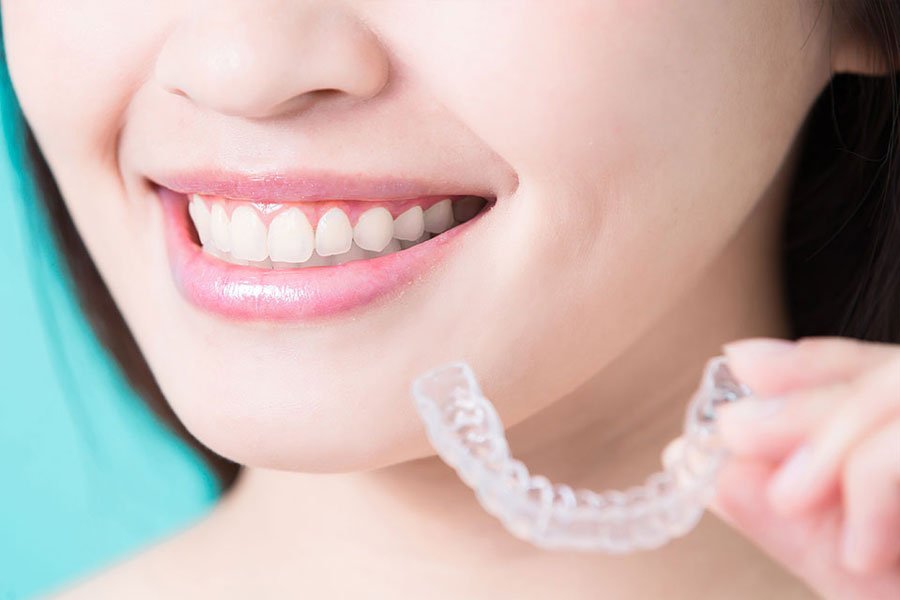
The landscape of orthodontics has undergone a radical paradigm shift over the last two decades. The days when fixed appliances—metal brackets and archwires—were the sole methodology for correcting malocclusion are behind us. Enter the era of digital orthodontics, spearheaded by the Invisalign system. This is not merely a cosmetic alternative; it is a sophisticated medical procedure rooted in biomechanics, material science, and 3D computational modeling.
For patients and prospective candidates, understanding the Invisalign procedure requires looking beyond the aesthetics. It requires a deep dive into the engineering and biological processes that facilitate tooth movement. This guide explores the technical workflow of the Invisalign system, from digital data acquisition to the physiological remodeling of alveolar bone.
Phase 1: Data Acquisition and Digital Integration
The procedure initiates not with a mold, but with data. Traditional Polyvinyl Siloxane (PVS) impressions have largely been superseded by intraoral scanning technology, specifically the iTero Element® scanner.
This phase is critical for the accuracy of the final appliance. The scanner captures 6,000 images per second, creating a highly precise, interactive 3D digital model of the patient’s dentition and gingival structures. This eliminates the distortion often associated with physical impressions. The digital file (STL) allows the orthodontist to analyze not just the alignment, but the occlusion (bite relationship) in real-time, identifying issues such as crossbites, overjets, and Class II or III malocclusions with micron-level precision.
Phase 2: The ClinCheck® Interface and Treatment Planning
Once the digital anatomy is captured, the data is uploaded to the ClinCheck® software. This is the “brain” of the Invisalign operation. However, a common misconception is that the software dictates the treatment. In reality, the software is a tool manipulated by the orthodontist’s expertise.
Using the software, the practitioner maps out the staging of tooth movements. Unlike braces, which often apply force to all teeth simultaneously, Invisalign allows for “selective staging.” The doctor determines which teeth move, in what order, and by how many millimeters or degrees of rotation.
At this stage, the orthodontist calculates the necessary force systems. They may program complex movements such as:
- Extrusion/Intrusion: Moving a tooth vertically in or out of the bone.
- Torque: Changing the angle of the tooth root.
- Distalization: Moving molars backward to create space.
This digital roadmap creates a visualization of the final result before a single aligner is manufactured.
Phase 3: Material Science and SmartTrack® Technology
Following the approval of the ClinCheck plan, the manufacturing process begins using stereolithography (SLA), a form of 3D printing. The aligners are not made of generic plastic; they are fabricated from a proprietary multilayer aromatic thermoplastic polyurethane known as SmartTrack®.
This material was engineered specifically for orthodontic load-bearing. It possesses high elasticity and shape memory, allowing the aligner to deliver a constant, low-level force over the one-to-two-week wear cycle. This is a significant evolution from early generations of clear aligners, which were often too rigid or lost force delivery too quickly. The SmartTrack material ensures a precise fit, wrapping intimately around the dental morphology to maximize control over tooth movement.
Phase 4: The Biomechanics of Movement (Attachments and IPR)
For the aligners to work effectively, they often require auxiliary features bonded to the teeth. Plastic alone cannot always generate the distinct force vectors required for complex root movements.
SmartForce® Attachments
These are small, tooth-colored shapes made of dental composite bonded to specific teeth. They act as “handles” for the aligner. The geometry of the attachment (beveled, rectangular, or ellipsoid) is dictated by the specific movement required. For example, to rotate a cylindrical premolar, the aligner engages the flat surface of an attachment to apply the necessary rotational moment.
Interproximal Reduction (IPR)
In cases of crowding, the orthodontist may perform IPR. This involves the mechanical removal of a fraction of a millimeter of enamel from the contact points between teeth. This is a safe, painless procedure that creates the precise amount of space required to align the dental arch without expanding it beyond the biological limits of the alveolar bone.
Phase 5: The Physiological Process and Patient Compliance
When a patient inserts a new set of aligners, a biological cascade begins. The plastic is slightly mismatched from the current tooth position—this mismatch creates pressure.
On a cellular level, this pressure compresses the periodontal ligament (PDL) on one side of the tooth and stretches it on the other.
- Compression Side: Osteoclasts are recruited to break down (resorb) bone tissue.
- Tension Side: Osteoblasts are stimulated to build (deposit) new bone.
This cycle of resorption and deposition allows the tooth to move through the bone. Because this cellular process takes time, compliance is non-negotiable. Clear aligners must be worn for 20 to 22 hours per day. Removing them for extended periods interrupts the constant force required to stimulate the osteoclasts, causing the PDL to recover and tooth movement to stall.
Phase 6: Refinement and Retention
Toward the end of the initial series of aligners, the orthodontist performs a re-evaluation. Because biological response varies between individuals, some teeth may not have “tracked” (moved) exactly as predicted by the algorithm. This leads to a “Refinement” phase. The patient is re-scanned, and a smaller set of finishing aligners is fabricated to perfect the occlusion.
Once the active treatment concludes, the retention phase begins. The periodontal fibers have “memory” and will attempt to pull teeth back to their original positions (relapse). To prevent this, Vivera® retainers—constructed from a denser, more durable material than the treatment aligners—are utilized to hold the teeth in their corrected positions while the bone fully mineralizes around the roots.
Frequently Asked Questions (FAQs)
Q1. Can Invisalign treat complex malocclusions, or is it strictly for minor cosmetic alignment?
While early generations of clear aligners were limited to simple tipping movements, the current Invisalign system is capable of treating complex Class I, II, and III malocclusions. Through the use of SmartForce® attachments and precision cuts for inter-arch elastics, orthodontists can now correct severe overbites, underbites, open bites, and crossbites. However, the success of these complex cases relies heavily on the provider’s ability to manipulate the ClinCheck® software to stage skeletal and dental movements correctly.
Q2. Why is the 22-hour daily wear time critical for the biological success of the treatment?
The 22-hour rule is based on the physiology of bone remodeling. For a tooth to move, constant pressure must be applied to the Periodontal Ligament (PDL) to stimulate osteoclast activity (bone breakdown) and osteoblast activity (bone building). If the aligners are removed for extended periods, the PDL relaxes, and the inflammatory process required for movement ceases. Frequent interruptions can cause the teeth to “lag” behind the aligner staging, leading to tracking errors and potentially extending treatment time.
Q3. Is Interproximal Reduction (IPR) safe, and does it compromise the long-term health of the enamel?
IPR is a safe, clinically recognized orthodontic procedure. Enamel thickness generally ranges from 1.5mm to 2.5mm, depending on the tooth. IPR typically involves removing only 0.2mm to 0.5mm of enamel, leaving ample structure to protect the dentin and pulp. It is performed to resolve crowding without extracting teeth or flaring them outward, which could compromise gum tissue. When polished correctly by a professional, the risk of increased decay or sensitivity is negligible.
Q4. What is the function of SmartForce® attachments, and are they mandatory for every patient?
Attachments are small, geometric composite shapes bonded to specific teeth to provide the aligner with a “grip” point. Plastic aligners naturally push effectively, but they struggle to pull or rotate rounded teeth (like canines and premolars). Attachments create an active surface area that allows the aligner to deliver precise force vectors, such as root torque or extrusion. While not every patient requires them, they are mandatory for cases requiring complex root control or significant rotation.
Q5. How does Invisalign differ clinically from direct-to-consumer (mail-order) aligner brands?
The primary difference lies in the diagnostic depth and supervision. Invisalign treatment begins with a comprehensive evaluation, including X-rays (to check root health and bone levels) and a periodontal exam. Direct-to-consumer brands often rely solely on impressions or photos. Without radiographic analysis, moving teeth can be dangerous if there is underlying bone loss, short roots, or impacted teeth. Furthermore, Invisalign allows for mid-course corrections and IPR, which are not typically available with remote treatments.
Q6. Is the treatment painful, and how does the level of discomfort compare to traditional fixed braces?
Most patients experience a sensation of pressure or tenderness for the first 24 to 48 hours after inserting a new tray. This is a sign that the biomechanical forces are activating the PDL. Generally, patients report less pain with clear aligners than with fixed braces because there are no metal brackets to abrade the soft tissue of the cheeks and lips. Additionally, the SmartTrack® material applies a more constant, gentle force compared to the high-intensity force often felt after tightening metal archwires.
Q7. Will my speech be affected by wearing the aligners?
Because the aligners add a layer of thickness to the lingual (tongue-side) surface of the upper front teeth, some patients experience a slight lisp for the first few days. This occurs because the tongue must adapt to the new contact points when articulating sibilant sounds (like ‘s’ and ‘z’). This is temporary; the tongue is a highly adaptive muscle, and normal speech patterns typically return within 3 to 5 days as the patient acclimatizes to the appliance.
Conclusion
Invisalign is far more than a cosmetic convenience; it is a highly technical orthodontic modality that leverages big data, advanced polymers, and biomechanical engineering. From the micron-accuracy of the iTero scanner to the cellular manipulation of osteoclasts, every step is calculated for precision.
However, technology is only as effective as the operator. The success of the procedure relies heavily on the clinical judgment of the provider and the disciplined compliance of the patient. By understanding the depth of this process, patients can better appreciate the journey toward a functional, healthy, and aesthetically pleasing smile.