


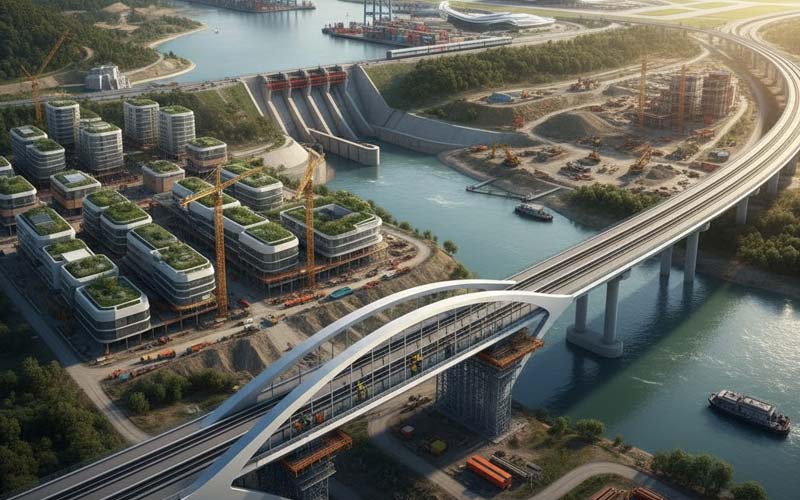
Global development efforts depend on the ability to build secure, resilient, and purpose-driven facilities across continents. Behind each successful project is a coordinated system of planning, logistics, and international standards designed to meet both civilian and defense priorities. The scale of government construction today reflects a growing need for adaptability, efficiency, and trust across borders.
Global Site Activation and Regional Asset Mobilization
Large-scale government builds often begin long before ground is broken. Site activation involves detailed surveys, regulatory approvals, and mobilization of regional assets—machinery, materials, and specialized labor. Global construction teams must synchronize these early stages with host-nation authorities to ensure infrastructure readiness, utilities access, and environmental compliance.
Mobilizing assets across multiple continents requires precision and foresight. A single project might involve materials sourced from several countries, local subcontractors trained to specific standards, and on-site coordination that supports continuous work despite geopolitical boundaries. These early efforts lay the foundation for efficient project execution under government oversight.
Multinational Compliance and Security Frameworks for Government Builds
Government construction often operates under strict multinational agreements and legal frameworks. Contractors must align with national security regulations, export control laws, and classified construction protocols when working in defense or embassy settings. These frameworks help maintain confidentiality and ensure compliance with both local and international mandates.
Security compliance extends into every aspect of a build—from background checks on laborers to data encryption used in design files. An international construction company must therefore maintain advanced governance systems to ensure all work meets agency requirements while safeguarding sensitive information on a global scale.
Risk Mitigation in Remote and Politically Complex Environments
Operating in remote or politically sensitive regions adds layers of unpredictability. Weather extremes, unstable local governance, and limited supply chains can delay progress without proper risk mitigation. Experienced global construction firms use pre-deployment analysis and on-site intelligence to identify threats before they disrupt operations.
Equally important is local engagement. Partnering with regional contractors, sourcing materials domestically, and employing adaptive project sequencing helps minimize exposure to unforeseen issues. These proactive steps allow government construction teams to maintain stability in volatile environments while upholding performance standards.
Strategic Coordination of Subcontractor Ecosystems Across Borders
Managing subcontractors across multiple jurisdictions requires clear communication and centralized oversight. Government construction projects rely on structured management frameworks that set expectations for safety, reporting, and delivery milestones. Without this coordination, projects spanning several countries risk inconsistency in execution and quality.
Technology now plays a major role in bridging these geographic gaps. Cloud-based platforms, shared digital blueprints, and real-time data monitoring keep subcontractor networks aligned under one unified system. This ensures accountability while maintaining transparency between agencies, partners, and on-site teams.
Lifecycle Sustainability Embedded in Infrastructure-centric Projects
Modern government construction increasingly integrates sustainability as part of its mission rather than a secondary feature. From energy-efficient power systems to recycled construction materials, environmental accountability has become a defining metric for project success. Incorporating these measures reduces long-term maintenance and supports global environmental commitments. Beyond design, lifecycle sustainability focuses on performance after handover. Facilities built under this principle consume fewer resources and adapt to changing operational needs. It reflects a shift toward resilience—ensuring that global construction projects remain viable and efficient for decades after completion.
Adaptive Logistics Planning for Mission-critical Facility Deployments
Construction for embassies, defense installations, and research outposts often takes place in locations with limited infrastructure. Adaptive logistics planning ensures materials, personnel, and equipment arrive where they’re needed—on time and intact. This demands expertise in international shipping regulations, customs clearance, and secure transport.
Project teams frequently establish temporary supply hubs or use modular prefabrication to accelerate timelines. These strategies limit on-site congestion and reduce risk during sensitive deployments. For mission-critical builds, flexibility in logistics can determine whether operations launch successfully or face costly delays.
Stakeholder Alignment in High-visibility Public Sector Construction
Public sector construction carries both political and social visibility. Projects funded by national or multinational governments require consensus among agencies, local authorities, and community stakeholders. Achieving alignment means maintaining transparency, managing expectations, and demonstrating measurable progress throughout construction.
Regular reporting, site visits, and performance reviews reinforce accountability. For an international construction company managing multiple government clients, consistent communication not only builds trust but ensures that each decision aligns with broader policy objectives and diplomatic considerations.
Operational Readiness Through Phased Commissioning and Turnover
Before a government facility becomes operational, it undergoes phased commissioning—a systematic process of testing systems, training personnel, and certifying compliance. This ensures that mechanical, electrical, and communications systems function flawlessly under real-world conditions. The process requires collaboration between engineering teams, inspectors, and agency representatives.
Turnover extends beyond handing over keys; it includes transferring data, warranties, and training programs that guarantee operational continuity. This deliberate process secures long-term usability and allows mission teams to occupy facilities with full confidence in performance and safety.
In large-scale global construction, success depends on coordination across engineering, logistics, and compliance disciplines. Government construction initiatives today operate at the intersection of technology, policy, and international collaboration. For agencies seeking partners capable of meeting these complex demands, Navigator International provides the expertise and operational reach to deliver world-class results across defense and public infrastructure worldwide.